A Small Memorial with a World War I Story
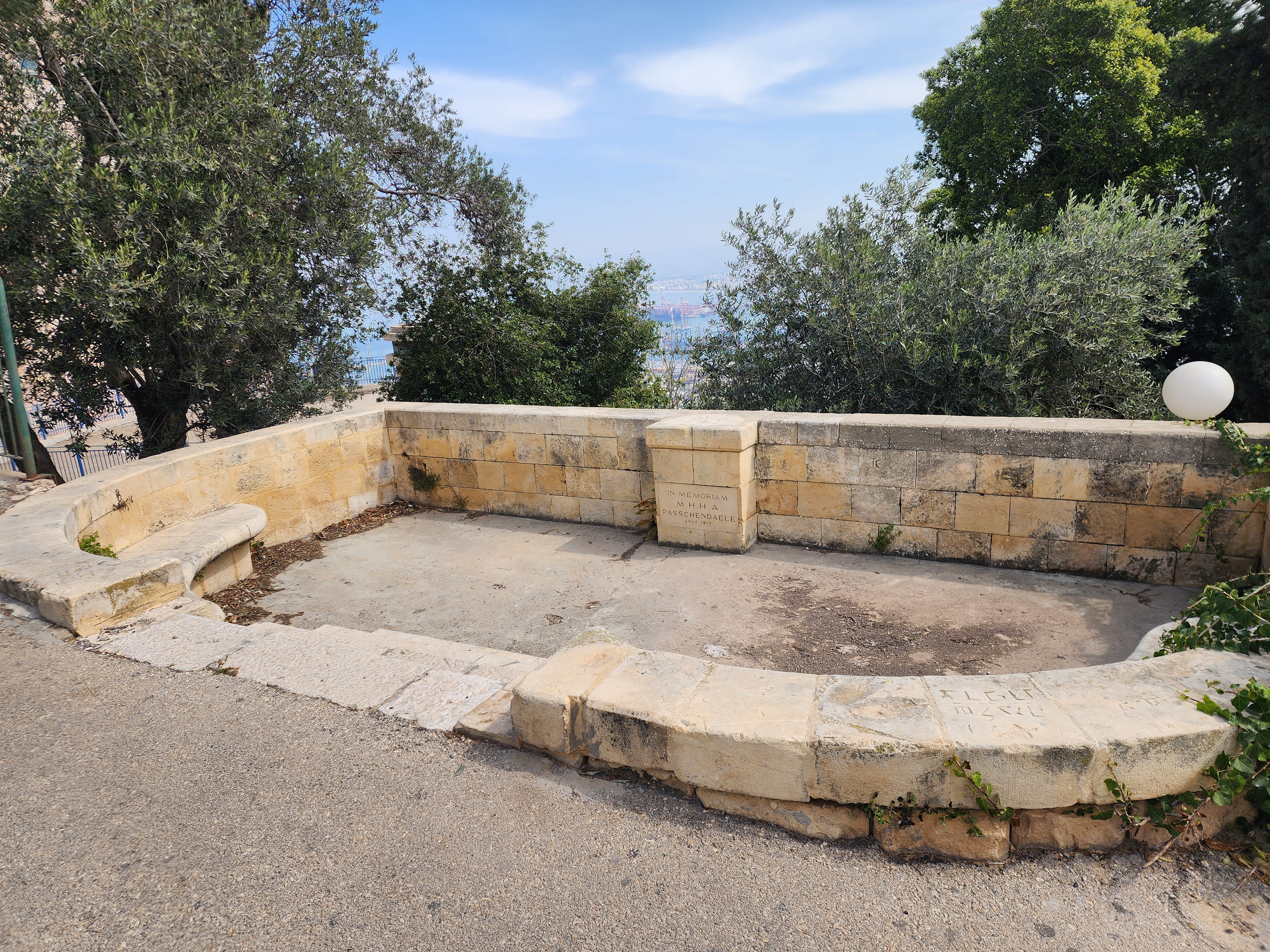
Perched on the slopes of Mount Carmel above Haifa Bay sits a small, easily overlooked stone terrace known as Allenby Lookout. It does not resemble the grand monuments typically associated with military history. Instead, the site feels more like a quiet corner of a garden: a curved limestone bench, a low stone wall, olive trees leaning gently over the terrace, and beyond them the distant shimmer of the Mediterranean and the industrial outlines of Haifa’s port.
Yet this modest overlook carries a story that reaches from the hills of Haifa to the muddy battlefields of Belgium during the First World War.
Allenby Lookout was established in 1934 during the British Mandate period. The viewpoint was created by Florence Downes, a British resident of Haifa who lived nearby on the Carmel ridge. She built the small stone lookout in memory of her nephew, Lieutenant Horace Michael Hynman Allenby. The young officer was the son of General Edmund Allenby, the famous British commander who led the Egyptian Expeditionary Force and captured Jerusalem and Palestine from the Ottoman Empire in 1917.
Lieutenant Allenby did not die in the Middle East campaign associated with his father’s name. Instead, he was killed on the Western Front in one of the most brutal battles of the war — the Battle of Passchendaele in Belgium. On July 29, 1917, during the grinding fighting that defined that campaign, he lost his life at just nineteen years old.
Florence Downes chose Haifa’s Carmel slopes as the place to commemorate him. At the time the area was still a quiet hillside landscape dotted with villas, orchards, and terraced gardens overlooking the bay. From this vantage point the Mediterranean spreads wide below, the port stretches along the coastline, and on clear days the hills of the Galilee are visible across the water. It was a view both peaceful and expansive, the kind of place suited for reflection.
The structure she built is simple but thoughtfully designed. A curved semicircle of Carmel stone forms a small terrace set slightly below the surrounding path. The limestone blocks are warm in color, weathered by decades of sun and sea air. At the center of the wall a small dedication plaque commemorates Lieutenant Allenby. The terrace functions both as a bench and as a lookout, encouraging visitors to sit and take in the landscape.
During the Mandate period the site formed part of a modest garden donated by the Downes family. The memorial was never intended to be monumental. It was a personal act of remembrance placed within the landscape rather than imposed upon it. That understated quality remains one of the most striking aspects of the lookout today.
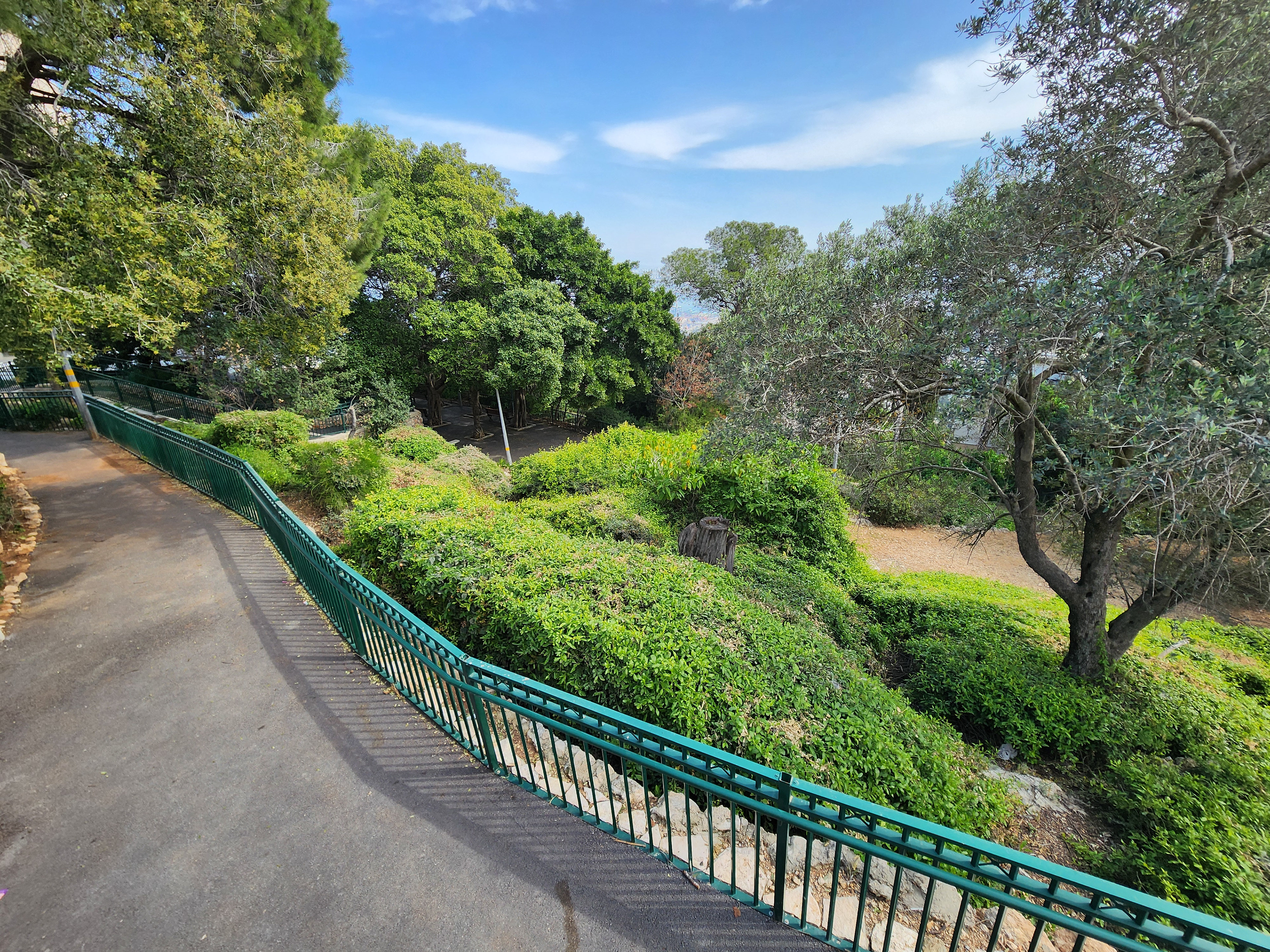
Over the decades Haifa grew dramatically around the site. Residential neighborhoods expanded across the Carmel ridge, roads and public paths were built along the hillside, and the once-private garden gradually became part of the city’s public green spaces. The lookout now sits along walking paths that descend through dense Mediterranean vegetation — pines, olives, and thick shrubs that partially frame the view of the bay below.
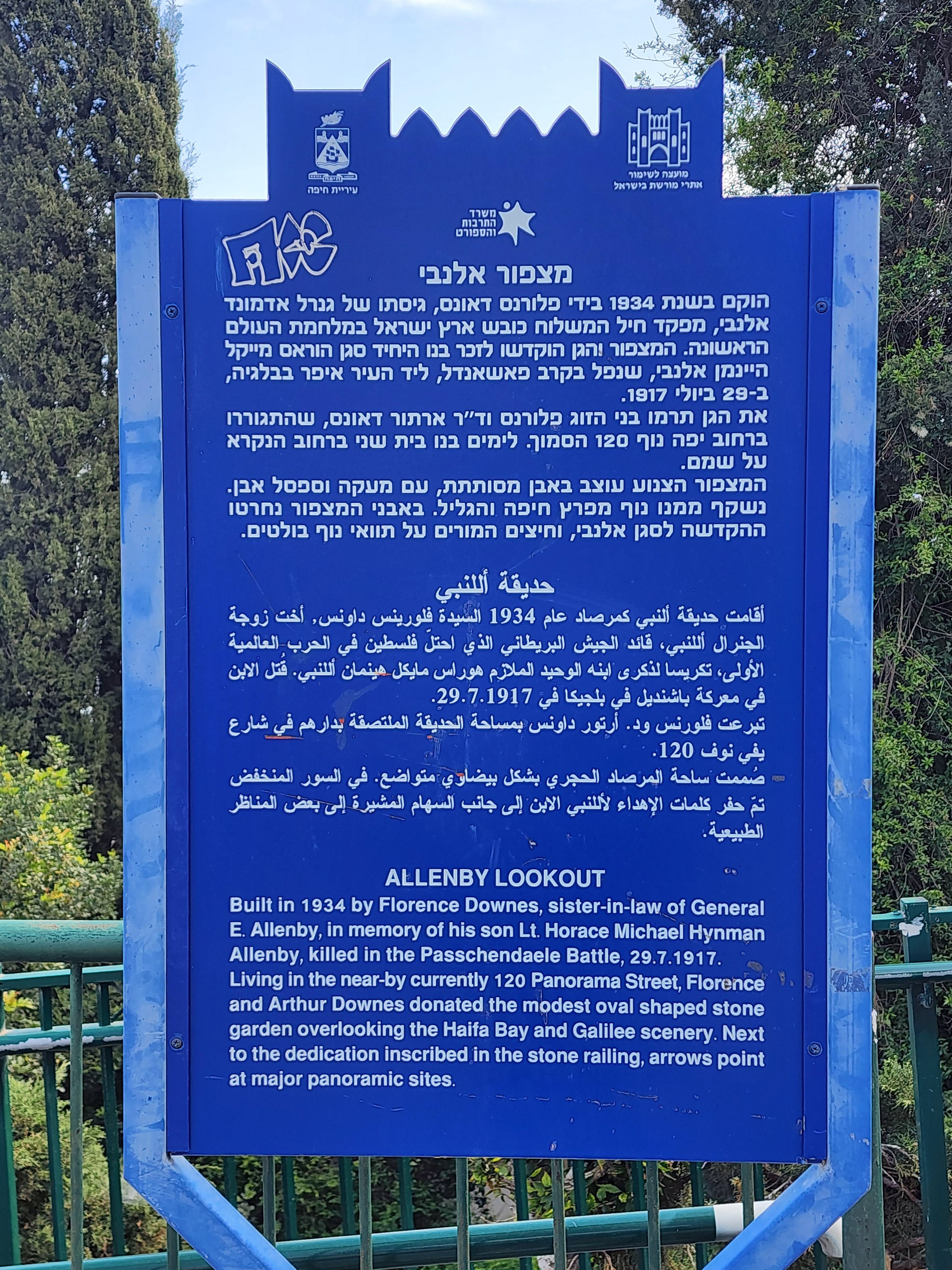
A modern information sign explains the history in Hebrew, Arabic, and English, noting the connection to General Allenby and the dedication to his son. The sign also mentions that small arrows carved into the stone railing point toward notable landmarks visible from the overlook, turning the site into a small geographic observation point as well as a memorial.
What makes Allenby Lookout fascinating today is its scale and quietness. In a city filled with busy streets, industrial docks, and dense neighborhoods, this small semicircle of stone feels almost hidden. There are no large statues, no grand columns, and no crowds gathering for photographs. Instead, the memorial blends into the hillside as if it has always belonged there.
And perhaps that is the point.
Rather than imposing a heroic narrative on the landscape, the lookout reflects something more personal: the grief of a family, the global reach of the First World War, and the unexpected ways those histories became embedded in distant places. A British officer who died in Belgium is remembered on a hillside above the Mediterranean, thousands of kilometers from the battlefield where he fell.
Visitors who pause there today often come simply for the view. But for those who notice the plaque and read the story, Allenby Lookout becomes something deeper — a quiet intersection of personal memory, imperial history, and the evolving city of Haifa itself.