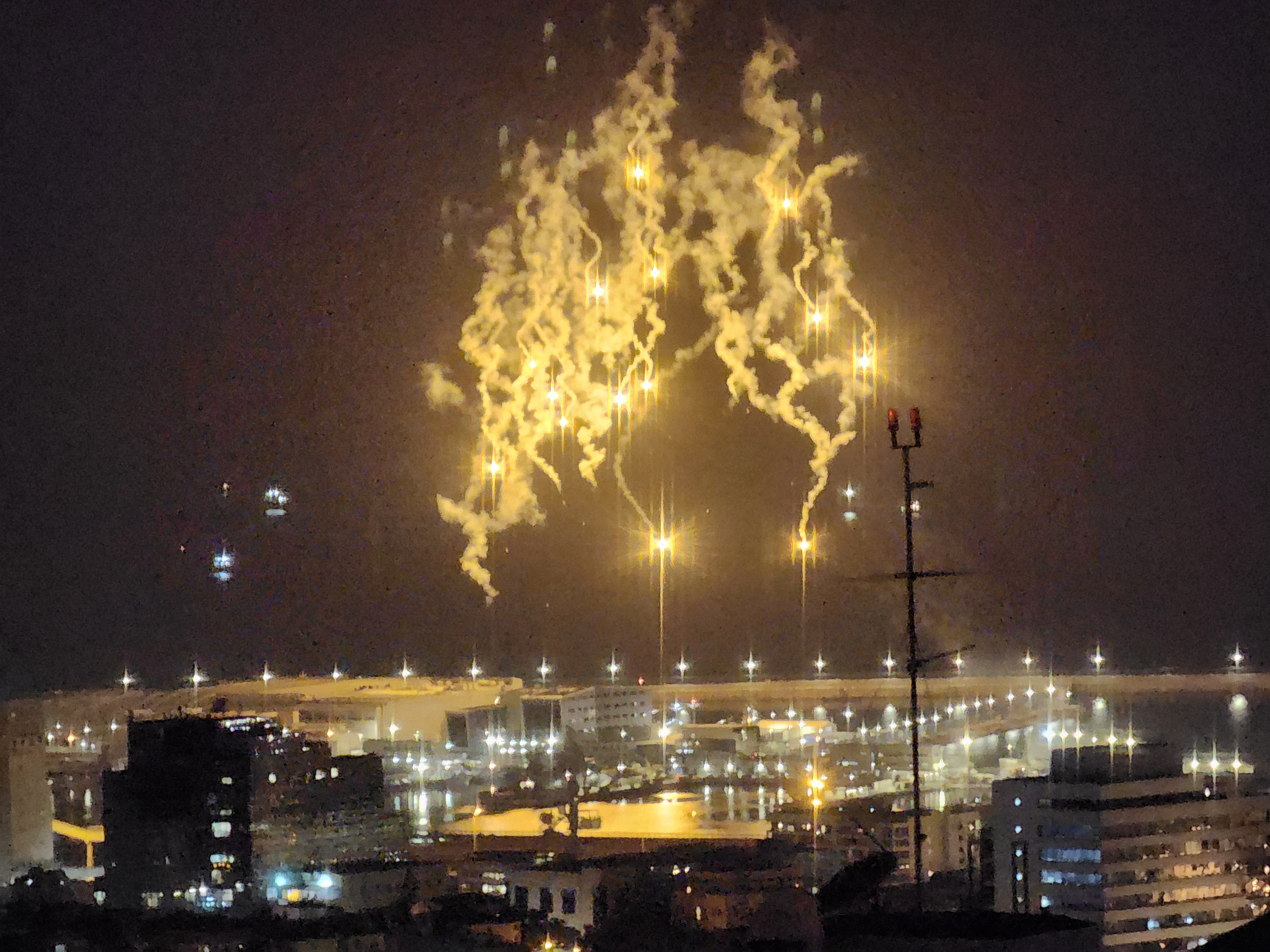
A night photograph taken from an elevated vantage point — a rooftop or upper-floor window — looking out across Haifa's lower city and port toward the bay. The image is heavily grained and slightly soft, the kind of noise a phone sensor produces when pushed in near-total darkness.
The upper two-thirds of the frame is dominated by a single firework burst caught at the moment of collapse. Golden-white trails hang downward in curling, tangled ribbons, each ending in a bright point of light with a small starburst flare. The overall shape reads almost like a hanging chandelier or a root system, the smoke from the shell still visible as pale twisting threads where the sparks have already burned through. A warm amber glow spreads outward from the centre into the brown-black sky.
Below the burst, the city runs in a horizontal band across the lower third. Port infrastructure and industrial buildings sit along the waterfront, lit by rows of white and sodium lamps that the lens renders as spiked points. Cranes, warehouse roofs and low blocks are visible in silhouette and half-light. On the left, a dark residential tower stands in the foreground with scattered lit windows; on the right, a larger pale building with regular floors of blue-white windows anchors the corner. Behind the port, the water of the bay catches a faint sheen.
A tall antenna mast rises through the right side of the frame, dark against the glow, topped with two small red aviation lights. In the left-middle distance, a few isolated lights float higher than the rest — likely masts, cranes, or a hillside structure above the port.
The mood is one of an ordinary evening interrupted by something bright: a crowded, working waterfront going about its business underneath a single extravagant flare of gold.