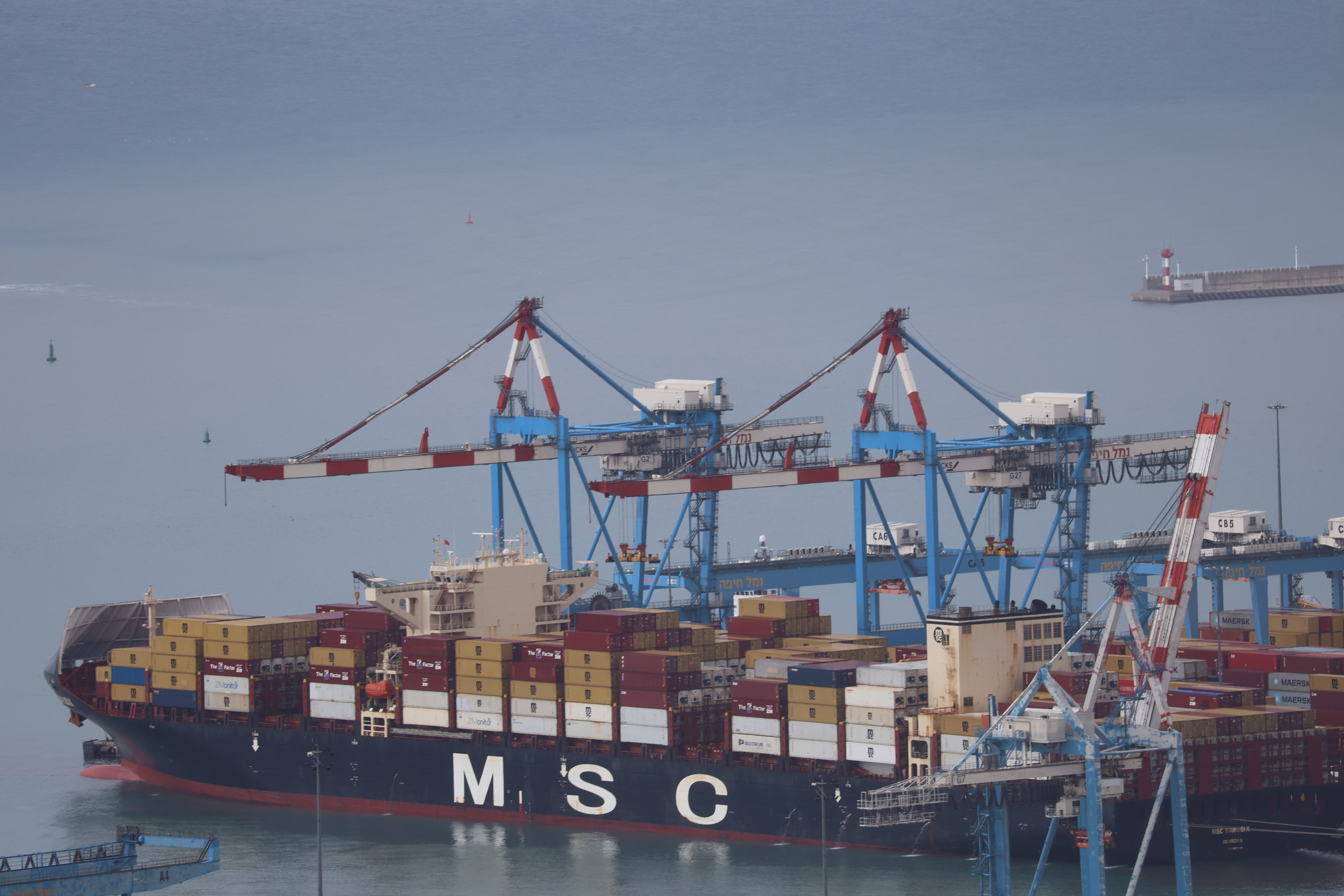
Israeli Ports Recalibrate as Global Container Shipping Slows DowThe image frames a familiar yet quietly telling scene at one of Israel’s major ports. An MSC container ship lies alongside the quay, its hull heavy with stacked containers in sun-faded yellows, reds, whites, and blues, arranged with near-mathematical precision. Above it, towering blue gantry cranes with red-and-white arms lean inward, frozen in a moment of industrial stillness, cables dangling as if waiting for a cue that hasn’t quite arrived yet. The Mediterranean stretches out behind them in muted gray-blue tones, calm and almost indifferent, punctuated by distant buoys and the hard line of a breakwater and lighthouse. Everything suggests capacity, readiness, and scale, but also a noticeable absence of urgency. It feels less like a rush hour and more like a pause between acts.
That pause fits neatly with what has been emerging across Israeli ports in recent weeks. After years of operating under extraordinary conditions, global container shipping has entered a post-boom phase, and Israel’s ports are feeling the shift. The pandemic-era supercycle, marked by congestion, equipment shortages, and record freight rates, has given way to softer demand and a wave of new vessel capacity hitting the water. For ports in Haifa, Ashdod, and the newer private terminals, the challenge is no longer how to clear backlogs fast enough, but how to stay competitive in an environment where shipping lines have more choices and margins are thinner. The image captures that reality visually: a full ship, modern infrastructure, and no visible bottleneck, just a system adjusting its rhythm.
Israeli ports sit at a particularly sensitive intersection of this global reset. Ongoing security concerns and recent disruptions to Red Sea shipping routes have rerouted traffic and stretched transit times, briefly supporting rates but complicating schedules. At the same time, Israel has invested heavily in port modernization and privatization, betting on efficiency, automation, and regional hub status. In the photograph, the cranes stand like symbols of that investment, sleek and capable, built for a future of volume and precision rather than emergency improvisation. The calm water and orderly layout underline a subtle truth: the stress has shifted away from the quay and into boardrooms, pricing models, and long-term strategy.
What makes the scene compelling is how unremarkable it appears at first glance. No crisis, no visible disruption, no drama. Yet this ordinariness is exactly the story unfolding at Israeli ports right now. They are transitioning from a period where every container move felt urgent and profitable to one where efficiency, cost control, and reliability define success. The ship will unload, trucks and trains will carry containers inland, and the cranes will resume their steady motion. But the era when global shipping shocks dominated daily port life has faded. Israeli ports, like the industry they serve, are settling into a new normal, quieter on the surface, more demanding beneath it, and shaped less by chaos than by careful recalibration.
Shaul Schneider on Port Security in a Digital Age, Cybertech Global Tel Aviv 2026
The image captures Shaul Schneider mid-sentence on the Cybertech Global Tel Aviv 2026 stage, seated yet commanding the space with a steady, grounded presence. He holds the microphone close, one hand slightly raised as if weighing a point rather than delivering a soundbite, his expression focused and deliberate. Behind him, the repeating Cybertech Global Tel Aviv 2026 backdrop fills the frame with crisp logos and sharp contrast, reinforcing the institutional weight of the moment. The lighting is cool and even, highlighting the seriousness of the discussion rather than theatrical flair, and placing Schneider visually at the intersection of infrastructure and cybersecurity rather than politics or performance.
As Chairman of the Board of Directors of Ashdod Port, Schneider’s appearance at Cybertech signals how deeply cybersecurity has entered the operational core of Israeli maritime infrastructure. His participation reflects a broader shift in how ports are understood: no longer just physical gateways for goods, but complex digital environments where cranes, logistics systems, vessel coordination, and national supply chains depend on resilient, secure networks. In this context, Schneider’s role on stage underscores that port governance today is inseparable from cyber resilience. The brief moment frozen in the image feels less like a conference highlight and more like a strategic checkpoint, where Israel’s critical infrastructure leaders openly acknowledge that the future security of ports like Ashdod will be decided as much in code and systems architecture as on the docks themselves.

Shaul Schneider, Chairman of the Board of Directors of Ashdod Port
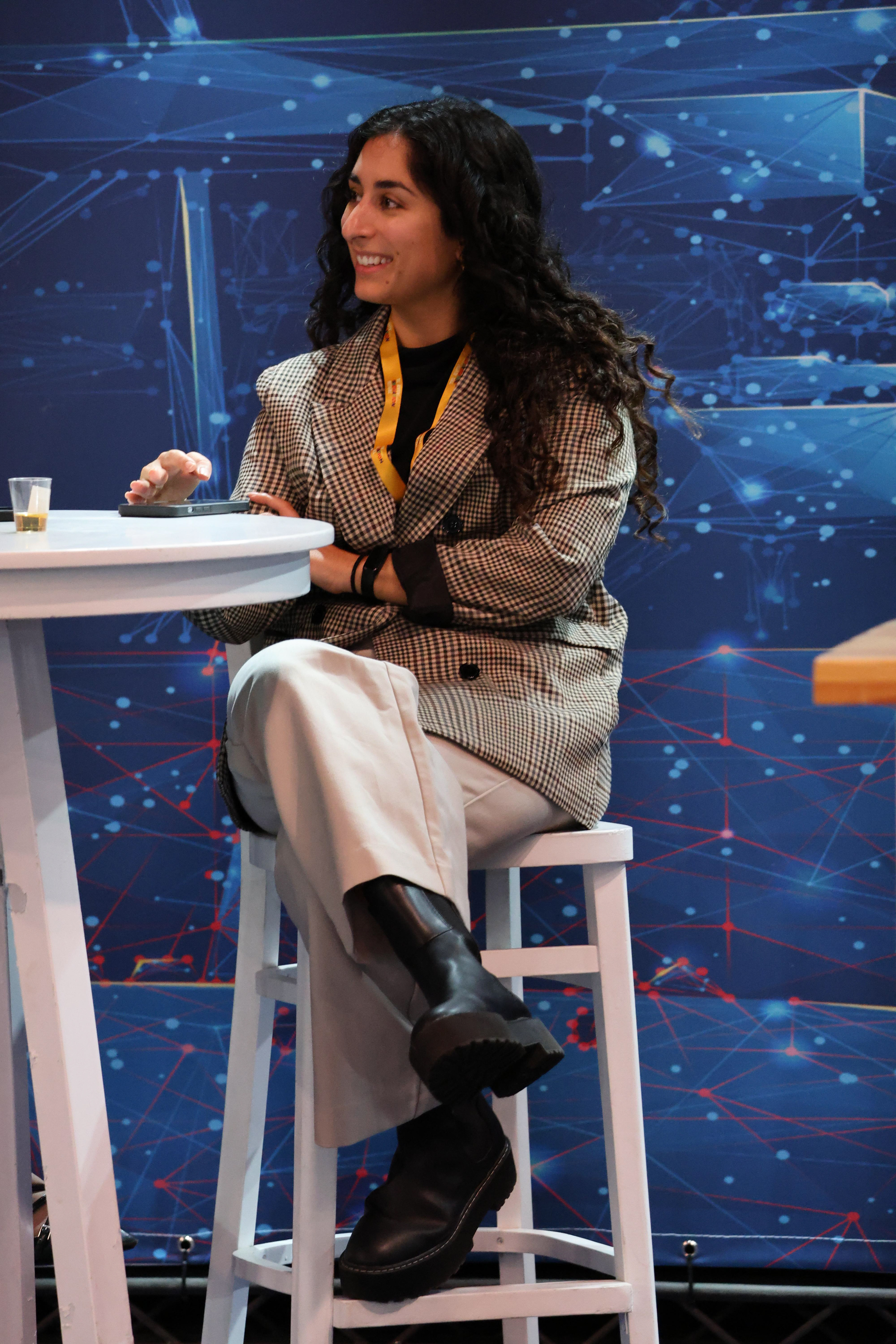
Ashdod Port Stand at Cybertech 2026