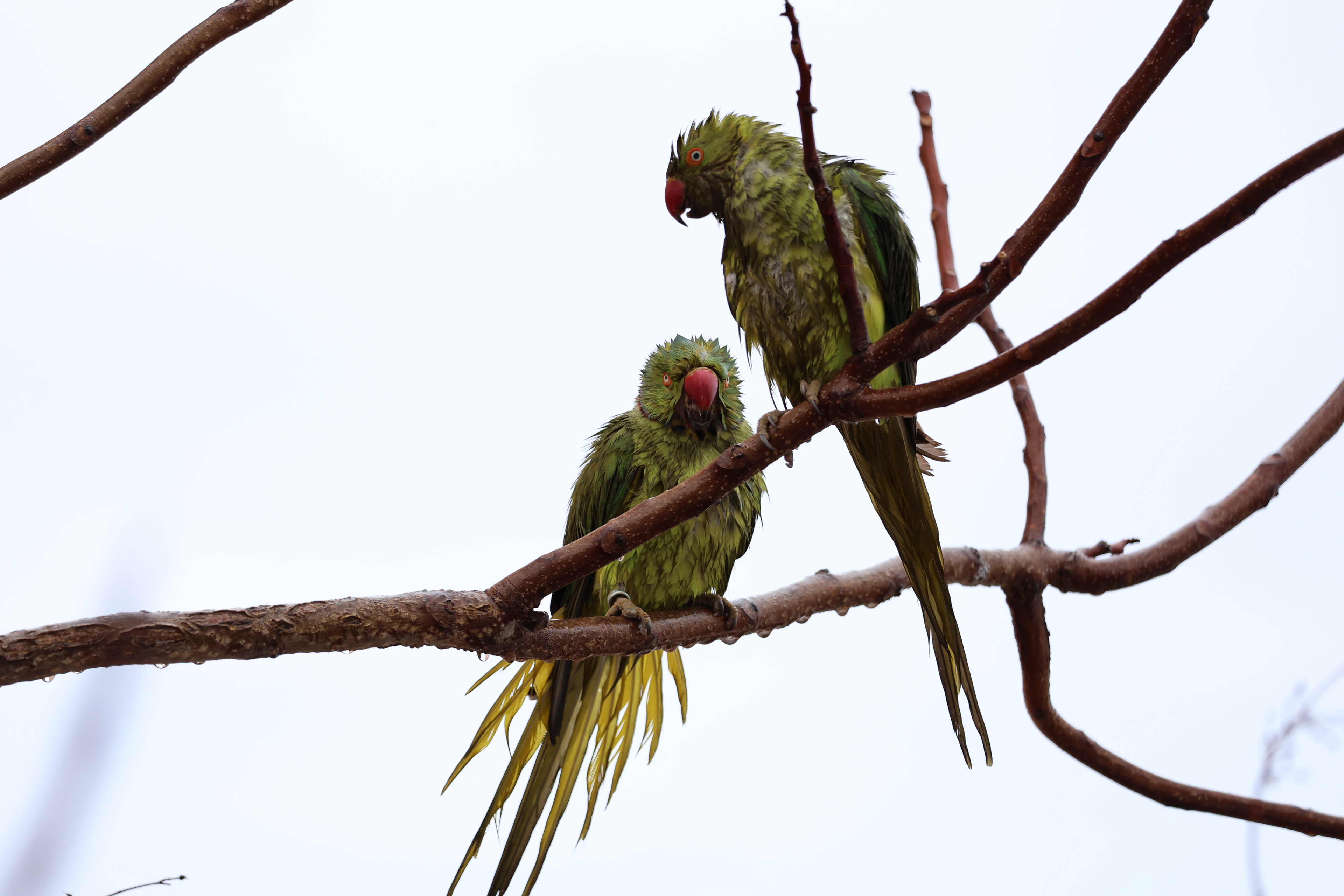
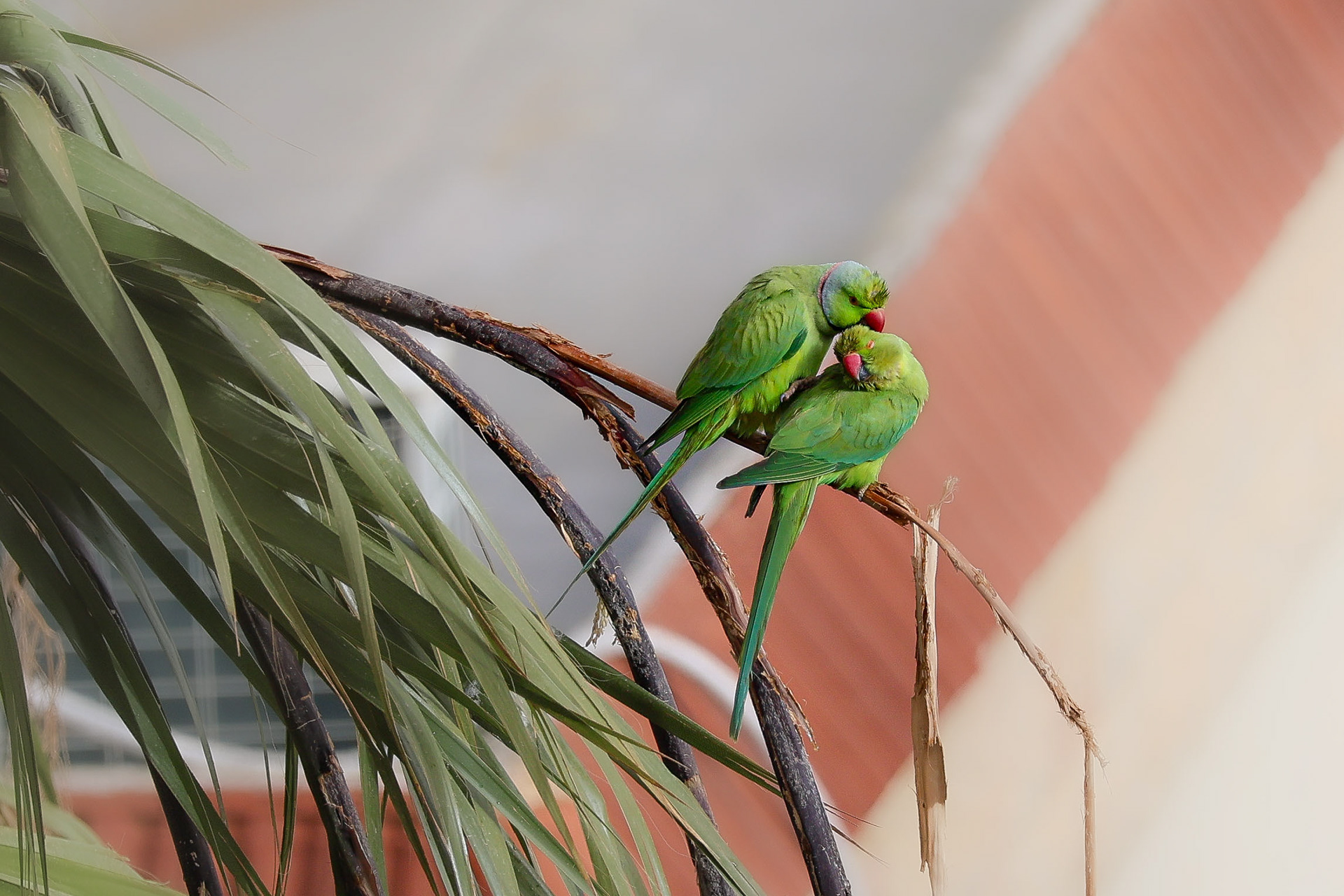
Parakeets have become such a familiar sight in Israel that it’s easy to forget they weren’t always part of the local scene. Today, they’re woven into the everyday urban soundtrack, especially in cities like Tel Aviv, Ramat Gan, Jerusalem, and the coastal plain, flashing green against concrete, palm trees, and winter skies. The birds in the image fit perfectly into that reality: two rose-ringed parakeets perched on leafless branches, feathers soaked and puffed up after rain, looking less exotic and more like slightly grumpy city residents waiting for the weather to pass. Their red beaks stand out sharply against the muted greens, and the long tails droop under the weight of water, which is a very familiar winter look for parakeets in Israel. The pale sky and bare branches suggest a brief Israeli winter moment, that in-between state where rain is rare enough to feel dramatic but common enough to leave its mark on urban wildlife.
Most of the parakeets you see in Israel are rose-ringed parakeets, originally native to parts of Africa and South Asia. They arrived decades ago, likely through escaped or released pets, and adapted with surprising speed. Israel’s mild climate, abundance of ornamental trees, and constant supply of food—fruit trees, parks, gardens, and unfortunately open trash—made the transition easy. In winter, scenes like this one are common: parakeets clustering together after rain, feathers fluffed for warmth, quieter than usual, conserving energy. Their usual noisy chatter gives way to short calls and long pauses, exactly the kind of subdued mood captured here, where the birds seem less interested in flight and more focused on enduring the moment.
There’s also a subtle tension around parakeets in Israel that adds another layer to an image like this. Some people love them, seeing flashes of green life in dense cities, while others view them as invasive competitors to native birds. Both things are true, depending on where you stand. What’s undeniable is how deeply they’ve embedded themselves into the visual language of Israeli urban nature. A rainy day, bare branches, two soaked parakeets sitting it out together—that’s no longer unusual or exotic. It’s just part of how Israeli cities look and feel now, a small, quiet reminder that nature here is adaptive, slightly messy, and always negotiating space with people, weather, and concrete.