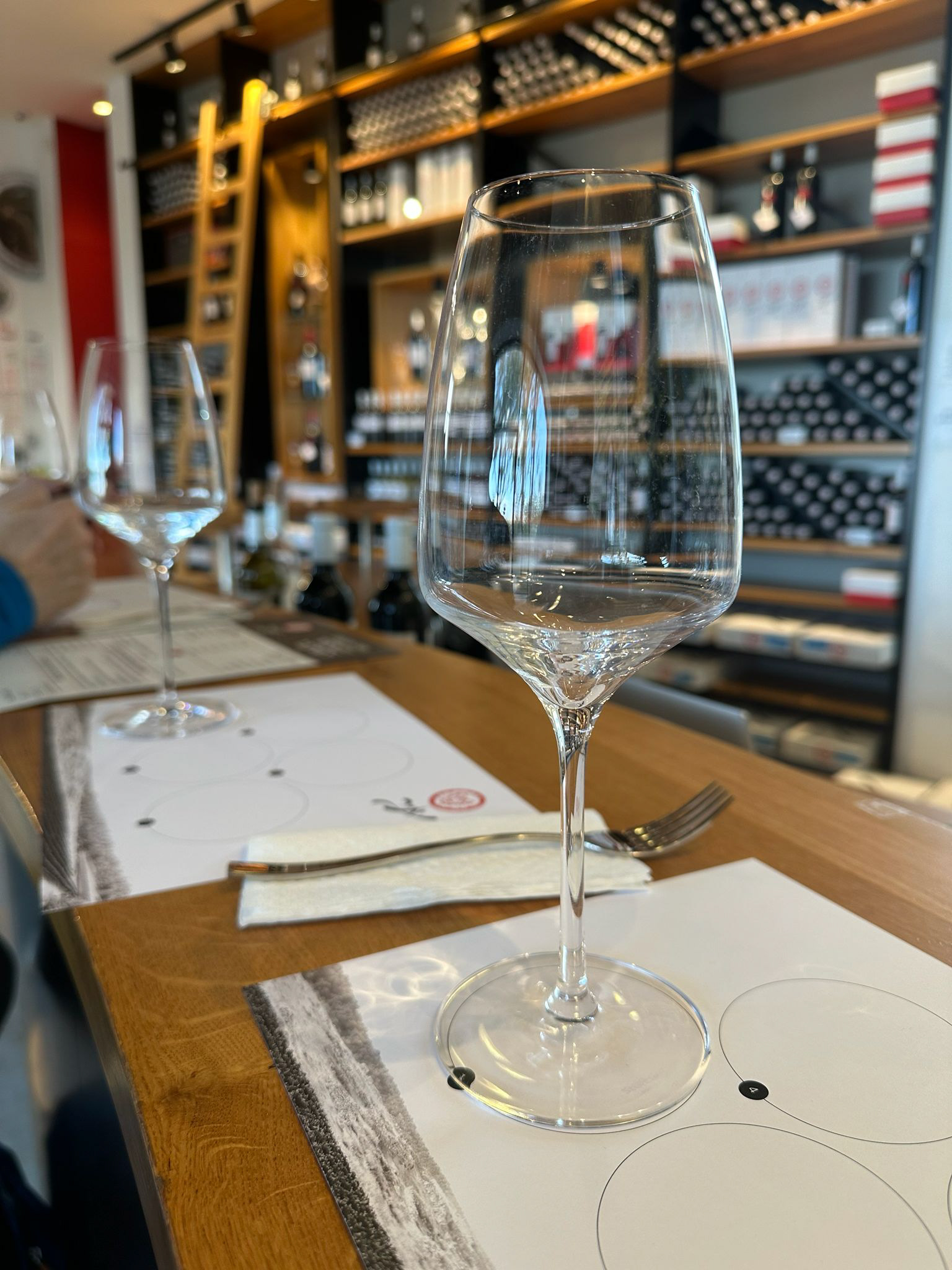
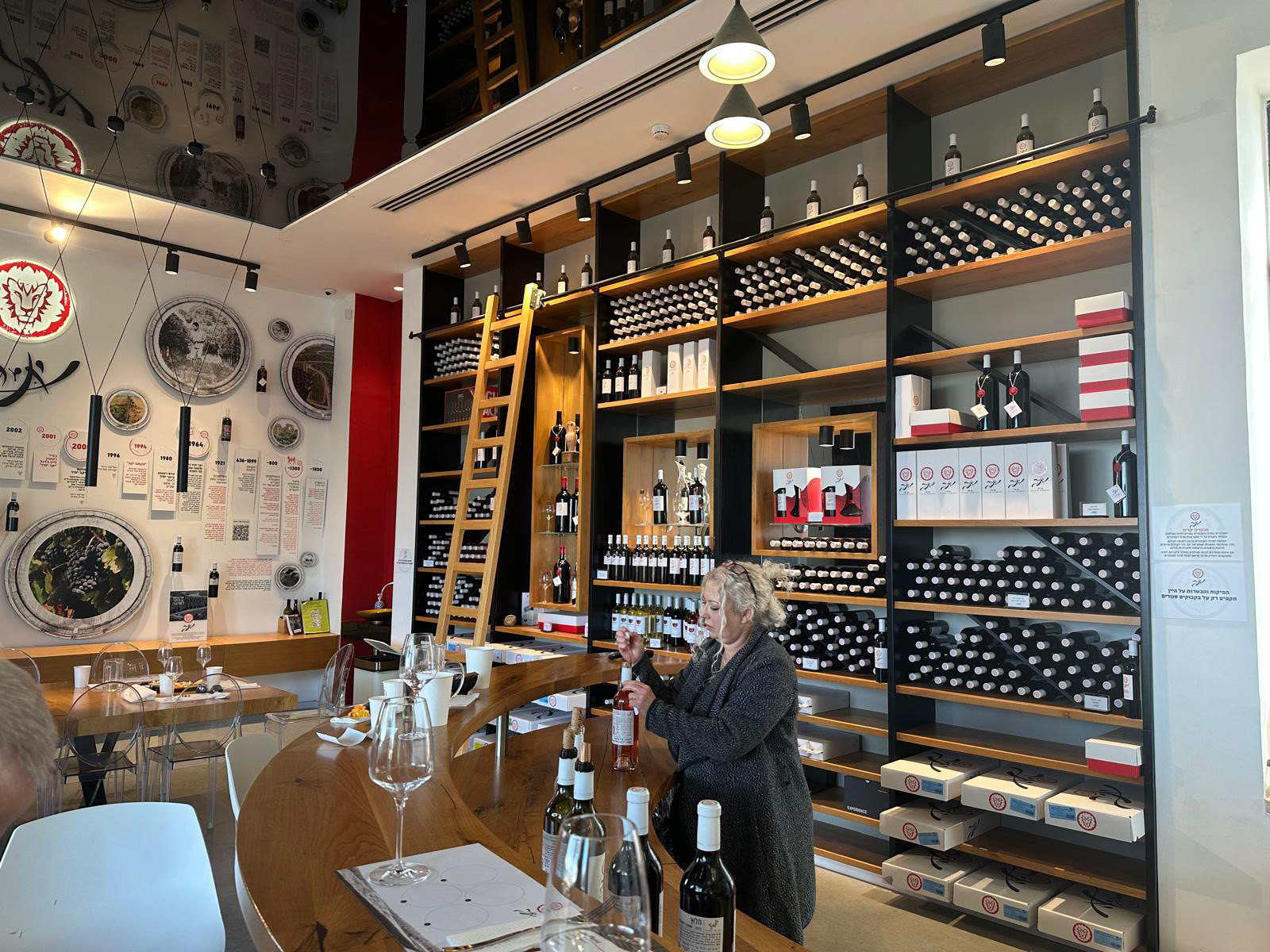
Walking into Yatir Winery feels less like entering a commercial tasting room and more like stepping into a calm, well-considered conversation between wine, space, and time. The first thing that quietly sets the tone is the light: warm, measured, bouncing off pale wood surfaces and tall shelves filled with bottles stacked with almost architectural precision. Nothing feels rushed here. The room breathes. In the foreground, a tall, perfectly clean wine glass stands on the tasting mat, catching reflections from the shelves behind it. You notice the curve of the bowl, the thin stem, the way the glass slightly distorts the rows of bottles beyond it. It’s one of those small visual moments that makes you pause before even thinking about what’s in the glass, and that pause seems intentional.
As you sit at the curved wooden counter, the space unfolds around you. Behind the bar, the shelves rise almost to the ceiling, filled with bottles arranged horizontally, labels facing inward, emphasizing form over branding. A wooden ladder leans casually against the shelving, practical but also quietly theatrical, like a reminder that this place is built for people who work with their hands as much as their heads. On the walls, illustrated timelines and vineyard imagery tell the story of Yatir without shouting. You can glance at them or ignore them entirely, both feel acceptable. In the background, staff move with an easy confidence, opening bottles, pouring with steady hands, answering questions without rehearsed enthusiasm. There’s no sales pressure, just presence.
What really stands out is how the tasting experience mirrors the winery’s philosophy. The wines are presented without unnecessary ceremony, yet with obvious respect. Each pour feels considered, measured, and purposeful. The staff take time to explain origins, climate, elevation, and aging, but they read the room well. If you want depth, they go deep. If you want silence and space to taste, they step back. That balance is rare. You can feel that the wines are treated not as products but as outcomes of long decisions made years earlier, in vineyards that demand patience rather than intervention.
Visually, the space reinforces that idea. The neutral palette, the clean lines, the absence of clutter, all allow the wine to stay central. Even small details, like the tasting mats with circular outlines for glasses or the neatly folded napkins beside understated cutlery, suggest care without stiffness. Looking across the room, you see other visitors leaning in, talking quietly, lifting glasses to the light. It’s social, but never noisy. The atmosphere encourages focus, conversation, and the kind of slow attention that good wine deserves.
Leaving Yatir Winery, you don’t carry the feeling of having visited an attraction. It feels more like you were briefly allowed into a working rhythm, a place where wine is made, explained, and shared without theatrics. The space, the people, and the wines align in a way that feels honest. You remember the taste, of course, but just as much you remember the light in the glass, the shelves stretching upward, and the sense that nothing here is trying too hard. That restraint, oddly enough, is what makes the experience linger.